If you spend time on video calls or catch your reflection in bright overhead lighting, you probably know the moment you started noticing your “11s” - those vertical creases between the eyebrows. Frown lines are mechanical and expressive, carved by years of squinting, concentrating, and reacting. They also become a reliable test case for how well botulinum toxin injections work, because the muscles that create them are strong, well-mapped, and responsive to treatment. After thousands of cosmetic consultations and plenty of follow-up visits, I can say frown line botox remains one of the most predictable, high-satisfaction procedures when done carefully. The nuance lies in dose, placement, and the balance between softening lines and preserving expression.
What frown lines are made of
Frown lines form primarily from repeated contraction of the corrugator supercilii and procerus muscles, sometimes with help from the depressor supercilii. These muscles pull the brows inward and down. Early on, the lines are dynamic, visible only when you frown. With time and collagen loss, they set into the skin even at rest. If you pinch the skin between your brows and feel a thick, ropey band that springs back, you’re palpating the corrugator. If you see a horizontal crease over the bridge of the nose when you scowl, that’s the procerus at work. Understanding this anatomy guides where a certified botox injector places the medication and how many botox units they use.
Botulinum toxin type A temporarily weakens these muscles by blocking acetylcholine release at the neuromuscular junction. The effect is local and dose dependent. For cosmetic botox in the glabella (the frown complex), a well-executed pattern keeps you from pulling the brows inward too strongly, which softens the vertical lines and can lift the central brow slightly. It should not freeze your entire forehead or distort your natural brow shape. The goal is natural looking botox, not a uniform shellac.
How effective is botox for frown lines?
Short answer: very. Among all facial areas, the glabella responds most consistently. In clinical practice and published studies, most patients see visible smoothing by day 3 to 5 after botox injections, with peak effect around day 10 to 14. On set-in, etched lines that have been there for years, botox treatment softens but may not completely erase them on the first round. If the skin has creased into a groove, muscle relaxation reduces the folding force, which helps the line stop deepening and gradually improves it. In cases of deeply set static lines, you sometimes combine botox with targeted skin treatments - microneedling, fractional laser, or a whisper of hyaluronic acid placed very superficially - to remodel the crease. But as a stand-alone for frown lines driven by overactive muscles, botox is the workhorse.
Several aspects influence the degree of improvement:
- Baseline line depth and skin quality. Finer, pliable skin smooths faster. Sun damage and smoking reduce collagen support, so the line may linger. Muscle strength. Strong corrugators require higher botox dosage and may need consistent repeat botox treatments before the line stays relaxed between cycles. Injection pattern. Hitting the right points in the corrugator and procerus, at the proper depth and angle, matters more than simply adding units. A trained hand minimizes diffusion to elevators of the brow, which avoids unwanted droop and preserves expression.
I’ve treated patients who start with a cautious “baby botox” dose, then realize they prefer a slightly stronger effect on the second session. Others, especially men with hefty brow muscles, need a confident starting dose to capture the muscle. When dose and placement are tuned to the individual, satisfaction is high and touch-ups are straightforward.
How long does botox last in the glabella?
Botox longevity generally ranges from 3 to 4 months for the frown complex, sometimes stretching to 5 or 6 months in lower-metabolism individuals or after several repeat sessions. Longevity isn’t a fixed clock. It’s a curve that rises as the medication starts working, plateaus for several weeks, then gradually tapers as the nerve endings regenerate.
Patients often judge duration by when they start to see movement return, not by when the lines are completely back. For frown lines, this usually means surface smoothness for the first 6 to 10 weeks, subtle twitching by week 10 to 12, and more noticeable return of folding after that. The interval you choose between sessions depends on whether you want to maintain complete line control or are comfortable with a little motion before the next appointment.
A few practical factors affect longevity:
- Dose adequacy. Under-dosing fades faster. Adequate botox units create a more durable block without looking heavy when placed correctly. Muscle mass and activity. People with thicker muscles or those who squint frequently may burn through the effect sooner. Metabolic rate. Fast metabolizers sometimes peak early and taper early. There’s individual variability here that shows up after your first cycle or two. Consistency. Staying on a schedule leads to smoother, more stable results. The skin has time to remodel when the folding force is kept low over several months.
What to expect during the botox procedure
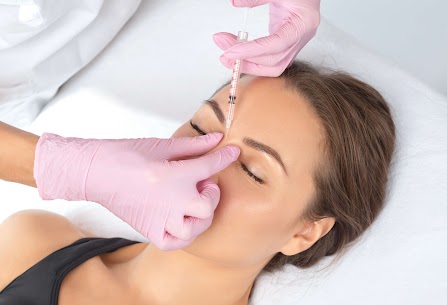
A precise glabellar treatment rarely takes more than 10 minutes in the chair. You’ll discuss your goals at a botox consultation, sign consent, and review safety points. Your botox provider cleans the skin with alcohol or chlorhexidine. Some apply a dab of topical anesthetic or ice for a minute. Most patients describe the botox injection process as quick, with a sting that fades in seconds. Five strategic points are standard across brands for the glabella, though patterns vary with anatomy: two in each corrugator and one in the procerus. Depth and angle control diffusion and effect.
If you’ve had forehead botox or crow feet botox in the same visit, your injector will reassess brow position before placing those doses. The relationship between the glabella, forehead elevators, and lateral canthal lines matters: over-relaxing one set without considering the others can either drop the brow or create a surprised arch. A balanced plan for facial botox prevents that.
Aftercare is straightforward. Expect small blebs at injection sites for 10 to 20 minutes. Avoid rubbing the area for the rest of the day. You can exercise lightly, but I advise skipping head-down yoga or intense cardio for 4 to 6 hours. Makeup is fine once any pinpoint bleeding stops. There is little to no botox downtime. If a bruise appears, it’s usually a pinpoint and resolves within a week.
Botox dosage and units in the glabella
The glabella is one area where standard dosing frameworks exist, with adjustments for sex, muscle mass, and goals. For many women, 10 to 20 botox units capture the corrugator-procerus complex well. For many men, 16 to 30 units are common, depending on muscle strength and desired stillness. Preventative botox in younger patients or those with minimal lines may use smaller doses, while etched lines or strong scowlers may need a full, even robust, dose.
There’s often curiosity about baby botox here. “Baby” refers more to droplet size and spread across many micro-points than to a fixed small total dose. True baby botox can look lovely on a forehead where you want maximal expression, but in the glabella, skimping too much can leave the corrugator partially active, which creates an odd central pull. A better strategy is precise, properly distributed botulinum toxin injections at a dose high enough to switch off the frown without migrating into brow elevators.
Your injector may use a familiar brand of botulinum toxin type A such as onabotulinumtoxinA, abobotulinumtoxinA, incobotulinumtoxinA, or prabotulinumtoxinA. Unit potency differs across brands, so a “unit” isn’t interchangeable. An experienced clinic understands these equivalencies. The emphasis should be on results, not raw unit count.
The look: natural results versus overtreated
Natural looking botox preserves a hint of motion and the brow’s individuality. When you attempt to frown, the center should resist deeply creasing, yet you can still emote in conversation. Over-relaxation can flatten the brow or, if combined with too much lateral forehead dose, lower it. Under-relaxation can leave a persistent vertical line that betrays your effort.
I’ve seen patients who come in worried about the “frozen” stereotype because a friend had an awkward arch. That arch often results from relaxing the glabella while leaving the lateral frontalis too strong, which lifts the tail and creates a surprised look. A balanced plan considers the forehead’s unique pattern. If you only treat the frown lines, you generally don’t cause that arch. If you treat frown lines and forehead lines together, the injector should use lower forehead doses and stay high enough to avoid brow drop.
How to judge effectiveness in your own mirror
Give botox results a fair two-week window before you decide. Early movement reduction is not the full picture. By day 10 to 14, you’ll know how the brow and glabella behave. Compare to your baseline in similar lighting. Look straight on, then three-quarters, then from the side. Try frowning, raising brows, and squinting. If a small asymmetry shows up - one side creasing more than the other - a low-unit touch-up at the botox clinic can even it out. Many offices include a brief follow-up to fine-tune within two to three weeks of your botox appointment.
Patients often bring past selfies to track progress. If you have older photos where your eyebrows pinch together, they’re useful for seeing how much the line has molded your skin over the years. After two or three cycles of professional botox injections at consistent intervals, those static grooves usually soften further because the skin stops being hammered by the fold.
Maintenance, timing, and touch-ups
Think of frown line botox as upkeep similar to dental cleanings or haircuts. A typical maintenance interval is every 3 to 4 months, extended if you remain smooth and happy. Some schedule by season: freshen before convenient botox options near me spring and late summer to align with weddings, photos, or holidays. Others prefer a consistent quarterly routine.
You can taper the dose, distribute it differently, or shift intervals based on preference. As muscles learn that scowling no longer gets a response, a subset of patients maintain results with slightly fewer units over time. Still, the safest approach is to evaluate movement at each visit, not just repeat the prior dose blindly. If your injector suggests a small botox touch up at two weeks, it’s typically because one corrugator head remained a touch too active or the procerus needed a tad more. Those micro-corrections pay off in symmetry.
Combining botox with skin therapies for stubborn lines
When the vertical grooves are etched, botox alone relaxes the bulldozer but doesn’t completely repave the road. Mild resurfacing can accelerate improvement. I like fractional non-ablative lasers for collagen stimulation with quick recovery. Light chemical peels can help. Very superficial hyaluronic acid and skin-boosting treatments can fill a narrow crease while the muscle remains relaxed. The art is to use the least filler necessary in the glabella because that area contains important vessels. Experienced injectors avoid deep boluses and use micro-threading techniques, or they refer to energy-based devices or microneedling with platelet-rich plasma when that’s a better fit. The combination approach leads to the most dramatic botox before and after comparisons in long-standing static lines.
Safety, side effects, and who should not get treated
Botox safety is well established when administered by a trained injector. Temporary side effects include small bruises, mild swelling, or a transient headache. Some patients feel a tightness as the muscle relaxes in the first week. Less common risks include eyelid or brow ptosis if the toxin diffuses into nearby muscles that lift the eyelid or brow. This risk is minimized with thoughtful injection technique, correct depth, and post-care that avoids heavy rubbing. Should ptosis occur, it usually resolves as the medication wears off, and eye drops can help manage symptoms.
People who are pregnant or breastfeeding should defer cosmetic botox. Those with certain neuromuscular disorders or taking aminoglycoside antibiotics should discuss risks with their physician. If you have a history of keloids or unusual scarring, that’s not a direct contraindication, but it’s worth noting. A competent botox specialist will review your medical history during the botox consultation and tailor your plan.
Pain level, recovery, and what the visit actually feels like
On a 0 to 10 scale, most patients rate frown line injections between 1 and 3. The discomfort comes from the brief needle prick and the sensation of fluid entering the muscle. Ice cubes or vibration tools make a noticeable difference for needle-sensitive people. The entire botox procedure is quick, with minimal recovery. You can return to work immediately. If you have a photo shoot, schedule injections at least a week ahead so everything settles to its best.
One practical anecdote: the rare person who feels “tight” near the brow for a few days generally acclimates quickly. This tightness is the transition from overactive to balanced muscle function. It fades as your brain recalibrates the lack of feedback from the now-relaxed muscle. Movement will still exist above the brow if the forehead wasn’t heavily treated.
Cost, value, and finding the right provider
Botox price varies by region, injector experience, and whether the clinic charges per unit or per area. In many US metro areas, a glabellar treatment runs roughly 12 to 25 dollars per unit, with typical glabellar doses ranging from about 12 to 30 units, so the area’s total can fall between about 200 and 600 dollars. Some offices offer botox deals or botox specials seasonally. While everyone appreciates affordable botox, value sits in precision and safety. A trusted botox clinic that uses authentic product, stores it properly, and employs a certified botox injector is worth it. Over-diluted product or imprecise patterns cost more in the long run because you either need rework or live with subpar results for months.
If you’re choosing a botox provider, look for photos of botox results that match your goals, clarity on botox dosage, and a willingness to say no or adjust the plan if your anatomy suggests a different approach. The best botox results come from alignment between your preferences and the injector’s aesthetic judgment. Some patients prefer maximal smoothing; others insist on subtle botox with meaningful expression. Both can be achieved, but the technique and doses differ.
Preventive botox and when to start
Preventive botox aims to reduce the habit of frowning and the microtrauma that sets lines. In practice, this can start when dynamic lines linger lightly at rest, which for many people falls in the late 20s to early 30s, though genetics and sun exposure shift that timeline. The goal isn’t to commit you to high doses early. It’s to reduce the repetitive folding long enough for collagen maintenance to keep the skin smooth. Some younger patients do well with a lighter dose at extended intervals. Prevention isn’t mandatory; it’s a choice for those who notice a scowl habit and want to retrain it before a crease takes hold.
The interplay with other facial areas
Treating frown lines in isolation is common and effective. Still, understanding how the glabella interacts with forehead lines and crow’s feet can improve outcomes. For example, if you only relax the glabella in someone who has overactive crow’s feet muscles, they may squint more at the outer eye to emote, which exaggerates lateral lines. Conversely, relaxing crow’s feet alone can make the central brow seem more active. A measured plan across the upper face keeps expression balanced and soft across zones.
I often counsel first-time patients to start with the concern that bothers them most, then reassess. Many later add forehead botox or crow feet botox to even out expression. The point isn’t to build a menu; it’s to curate what serves your face best.
Managing expectations: what botox can and cannot do
Botox for frown lines is a smoothing treatment, not a skin resurfacer or volumizer. It reduces the force of folding and relaxes the overlying skin. If you expect etched lines to vanish in 72 hours, you might feel underwhelmed. If you expect a gradual softening with a rested look and less scowl, you’ll likely be pleased. Timing matters: the two-week mark is the fairest test, and repeated cycles often bring compounding benefit as the skin has a break from constant creasing.
Also, botox isn’t permanent. Its reversibility is a feature, especially when you’re fine-tuning doses and patterns. If one pattern makes your brow feel a touch heavy, you can adjust next time. If you prefer more motion, your injector can shift units around. This iterative approach is part of why botox aesthetic treatments have a high long-term satisfaction rate.
A quick checklist before your first session
- Confirm you are seeing a licensed, experienced injector who offers safe botox treatment and uses authentic product. Bring reference photos of your brow movement when you’re frowning and at rest, ideally in similar lighting to the clinic. Discuss your tolerance for movement, any prior botox results you liked or disliked, and your schedule for maintenance. Avoid alcohol, aspirin, and high-dose fish oil the day before to reduce bruising risk, unless your doctor advises otherwise. Plan a two-week follow-up window to evaluate and, if needed, do a small botox touch up.
Real-world timelines: what a typical year can look like
For a new patient with moderate frown lines, the year might unfold like this: First treatment uses a standard dose, with a small adjustment at two weeks if needed. Movement starts returning around week 12. You repeat botox treatments at month four, noticing that lines, even at rest, look less etched. By the third cycle near month eight or nine, you find the dose that keeps you comfortable and natural. The glabella’s skin texture appears smoother in photos, and the scowl habit is much reduced. If you have a major event, you schedule the next botox appointment for two to three weeks before the date to be at peak. Over time, you and your botox specialist fine-tune the pattern so it feels like maintenance rather than an experiment.
Where the science meets aesthetics
Botulinum toxin has a clear mechanism and decades of safety data in both medical botox and cosmetic botox settings. The science explains why it works. The artistry explains why two patients with the same dose can look very different. Brow shape, forehead length, hairline height, and eye set change how each unit expresses on the face. The injector’s eye for proportion and restraint prevents the cookie-cutter look. This is also why price alone shouldn’t drive the decision. A top rated botox provider is one who listens, examines carefully, and adjusts the botox injection process to your anatomy.
Bottom line for frown lines
For smoothing the “11s,” botox is highly effective, quick, and customizable. Expect visible improvement within a week, peak results around two weeks, and longevity in the three to four month range, with variation based on dose and individual factors. Maintenance is straightforward. Side effects are typically mild and temporary when performed by an experienced injector. If your lines are etched, combining botox with light resurfacing or targeted skin treatments can speed texture improvements.
There’s satisfaction in looking less stern when you’re not remotely upset, and there’s value in easing a habit that deepens lines. Whether you choose a subtle preventive botox approach or a more assertive wrinkle botox plan, work with a trusted botox provider who explains choices in plain language, sets realistic expectations, and stands behind the results. That partnership, more than any single number of units, determines how good your results look and how long they last.